Short packs, bad seals, wrong labels.

A camera checks every pack for the faults that cost food lines product.

Tell us about the system

What does JM Automated Solutions inspect on food lines?

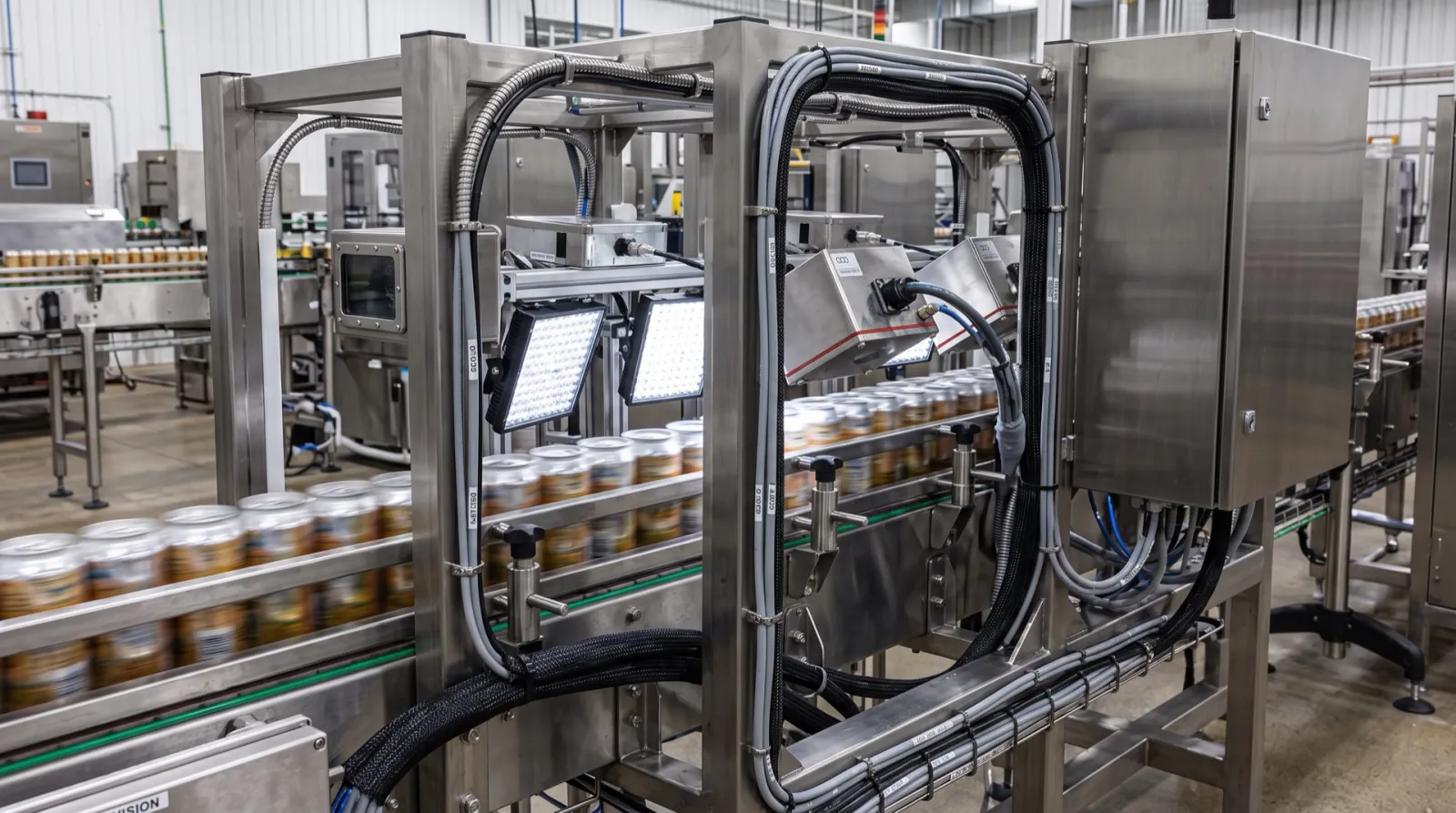
JM Automated Solutions builds camera inspection stations that check every food pack at line speed for a wrong or allergen-mismatched label, an unreadable date or lot code, a seal that did not close, foreign material, and a short or missing fill. The bad pack is rejected and its image is saved with the lot. Vision inspection supports your quality program; it does not replace FDA-mandated testing.

Based in Carlsbad, we work on food lines across North County San Diego, San Diego County and Southern California. See where we work.

On the line

What goes wrong on a food line?

Wrong label or allergen mismatch

Label and print are checked against the active recipe, including the text and the barcode. The line will not release the new SKU until the new label has been verified, and a mismatch holds the line.

Where this fits: Barcode station · Barcode tunnel

Codes are unreadable, or the case label does not match the units

The date, lot, and barcode are read on every pack and checked against the order that is running. OCV checks the printed date and lot against the expected text, and inline grading flags the printer before codes stop scanning.

The case label is read at the case packer, and its lot is matched to the lot read on the units going into the case. A mismatch holds the case before it reaches the pallet.

Where this fits: Barcode station · Barcode tunnel

A seal that did not close

The camera looks at the seal for wrinkles, contamination in the seal area, and a seal that did not finish. Recurring faults are flagged back to the sealer. The image is stored with the lot and the time, so a drifting jaw shows up before the next shift inherits it.

Where this fits: Single-camera station

A pack is short, over- or under-filled

Vision counts the pieces before the lid or the film goes on. A short pack is rejected before it is closed, and the count is logged with the lot.

Fill is checked at line speed, by vision or by weight, and the result goes back to the PLC. Drift alarms or trims the filler. Out-of-spec packs are held or diverted without waiting for a person to notice the trend.

Where this fits: Single-camera station

Foreign material is getting into product

We match the camera, the lens, and the light to the contaminant you actually need to find, and combine it with the metal detector result into one reject decision. Every reject keeps an image with the lot. This is an industrial quality check: it supports, and does not replace, your food safety plan and its required testing.

Where this fits: Single-camera station

Inspection jobs

Which inspection jobs fit a food line?

Which article covers a food inspection job?

Low-acid canned foods are closed with a double seam, and a can that does not seal can leak or let contaminants in after processing. How vision inspection catches double seam defects on a canning line walks through how a camera station checks can seams on the line, what it can and cannot see, and where the teardown check still applies.

For the basics behind any food station, read How machine vision works.

Next

Ask JM Automated Solutions about your food line.

Tell us the product, the defect that is getting out, and whether a station is already on the line and failing.

Send a quick note

Name, email and one line. A person reads it and replies.

We share data with ad partners.

By sending this form, you agree to our Privacy Policy. Prefer to call? (619) 619-8998.

Book a call

Want to send more detail? Tell us about the system with the full form.