
Station
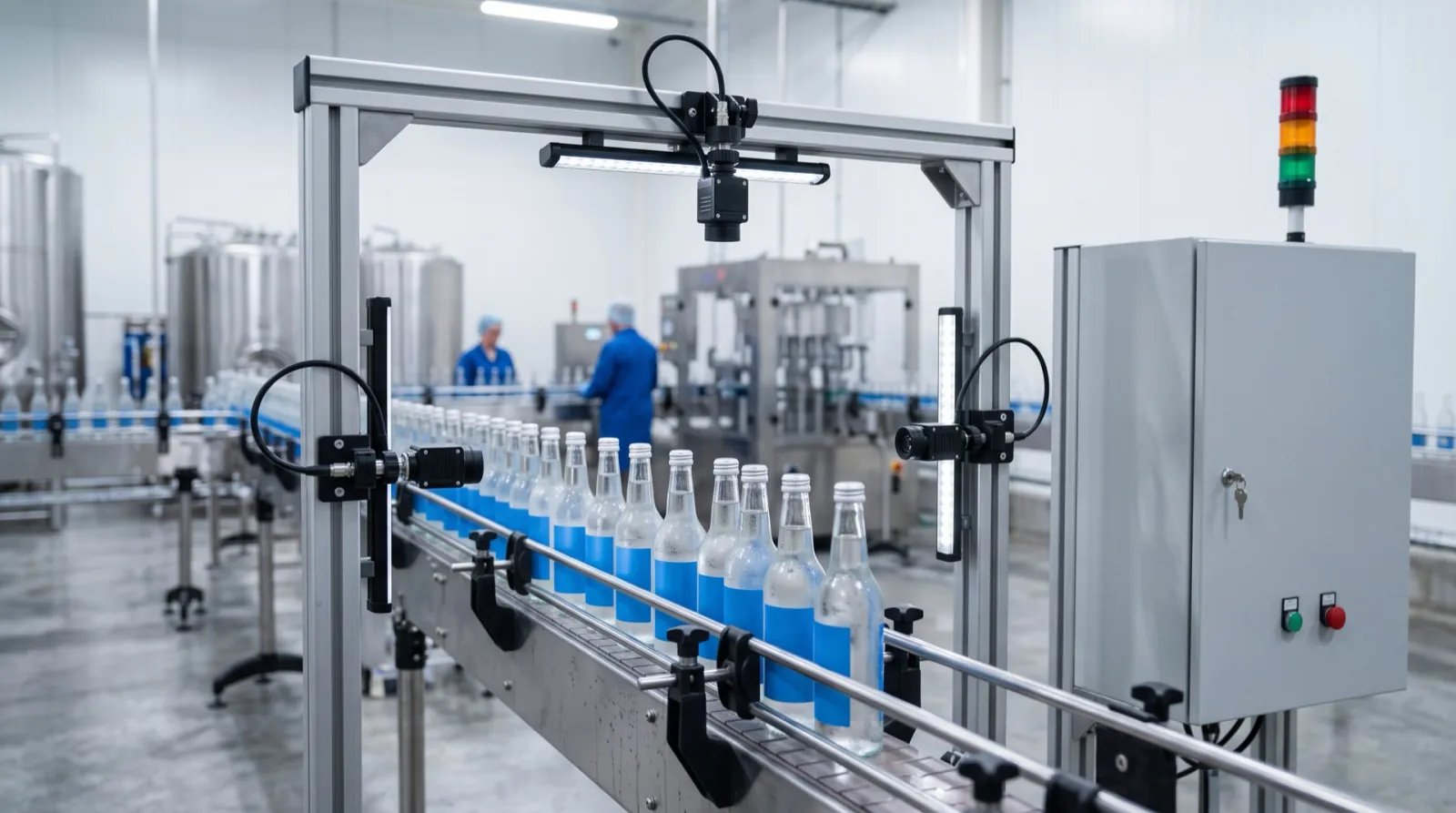
Three-camera vision station.
Three cameras around the product, so a fault on any side is caught, not just the one facing the camera. It is used when one view is not enough: a label wrapped around a bottle, a cap that can sit crooked on any side, or a scratch that can be anywhere on a part.
Key specifications
- Cameras
- Three cameras with their lights, around the conveyor at one point.
- Views covered
- All the way around the product.
- Typical checks
- Labels, caps and tamper bands, cosmetic and dimensional defects.
- Decision
- The three views are combined into one pass or fail for each unit.
- Output
- The failed unit is taken off the line. Pictures from all three views are saved with the reason and time.
- Industries
- Any line where the fault can face any side, most often beverage and medical devices.
Next step
Start with your line.
Tell us what you make and what is getting through. Start with a feasibility study.
Every station is tuned and reported on two numbers kept apart: false rejects, good packs thrown out, and escapes, bad packs let through.
Related: Compare stations · How the system works · Barcode station · Barcodes tool · All industries